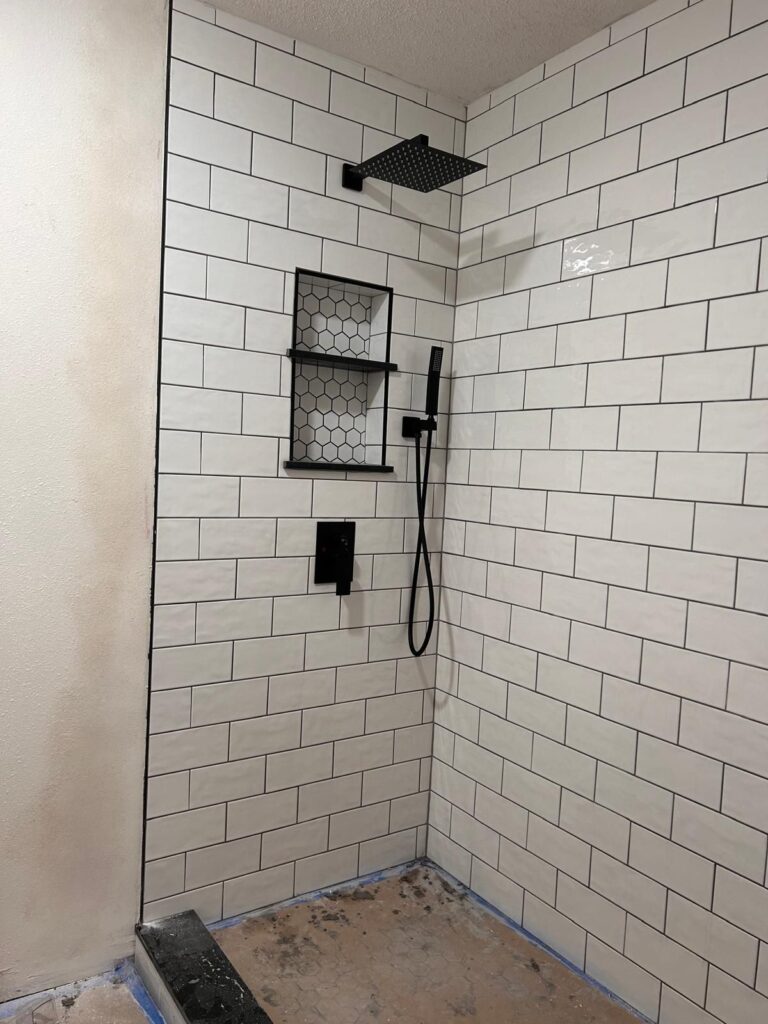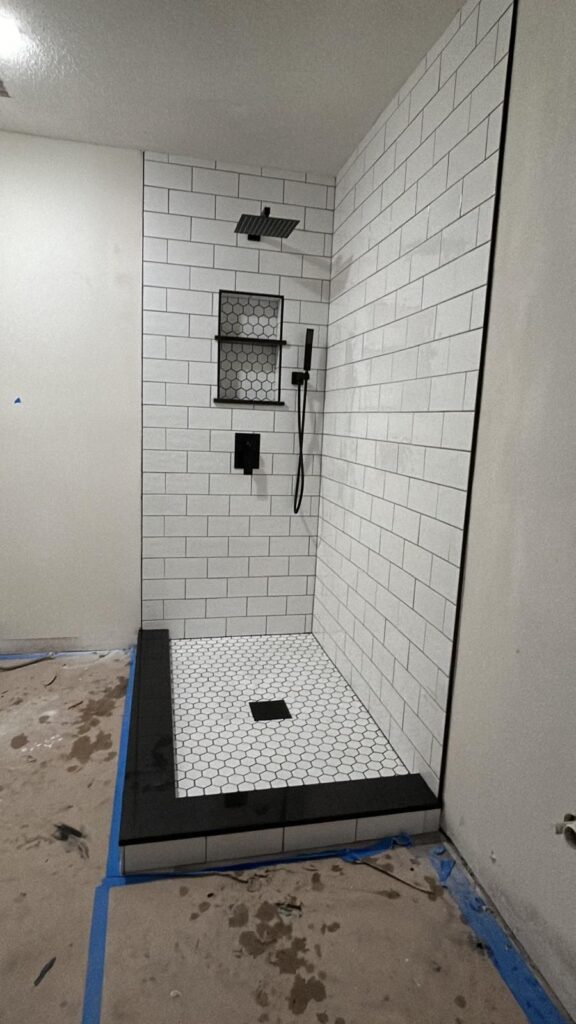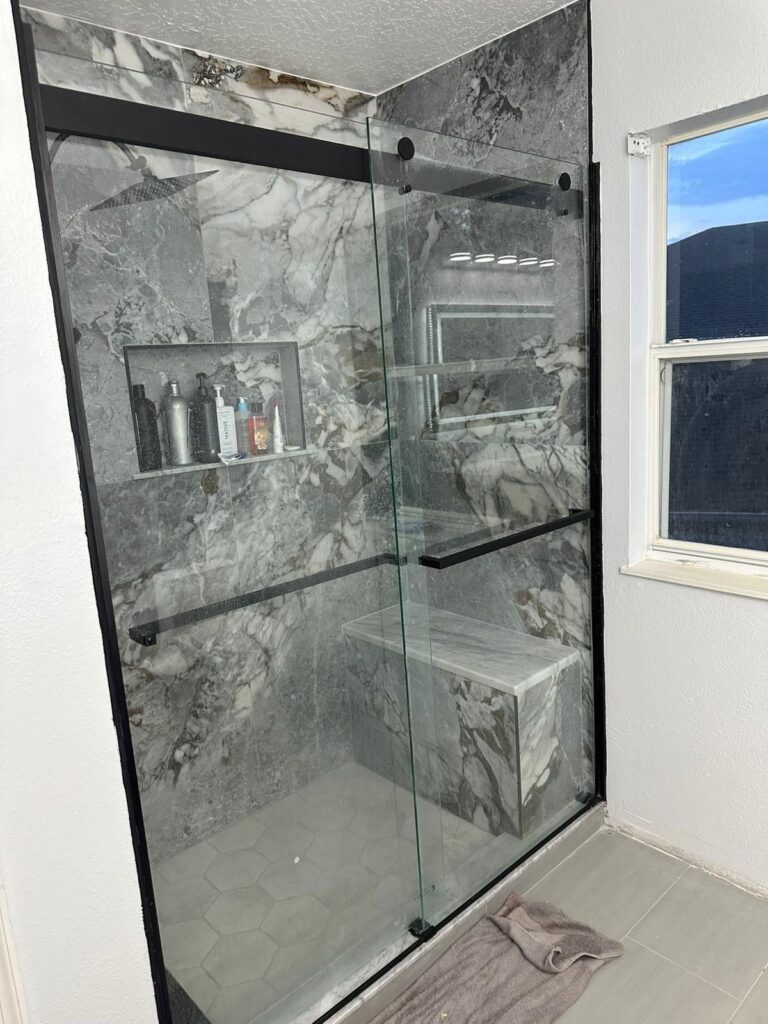
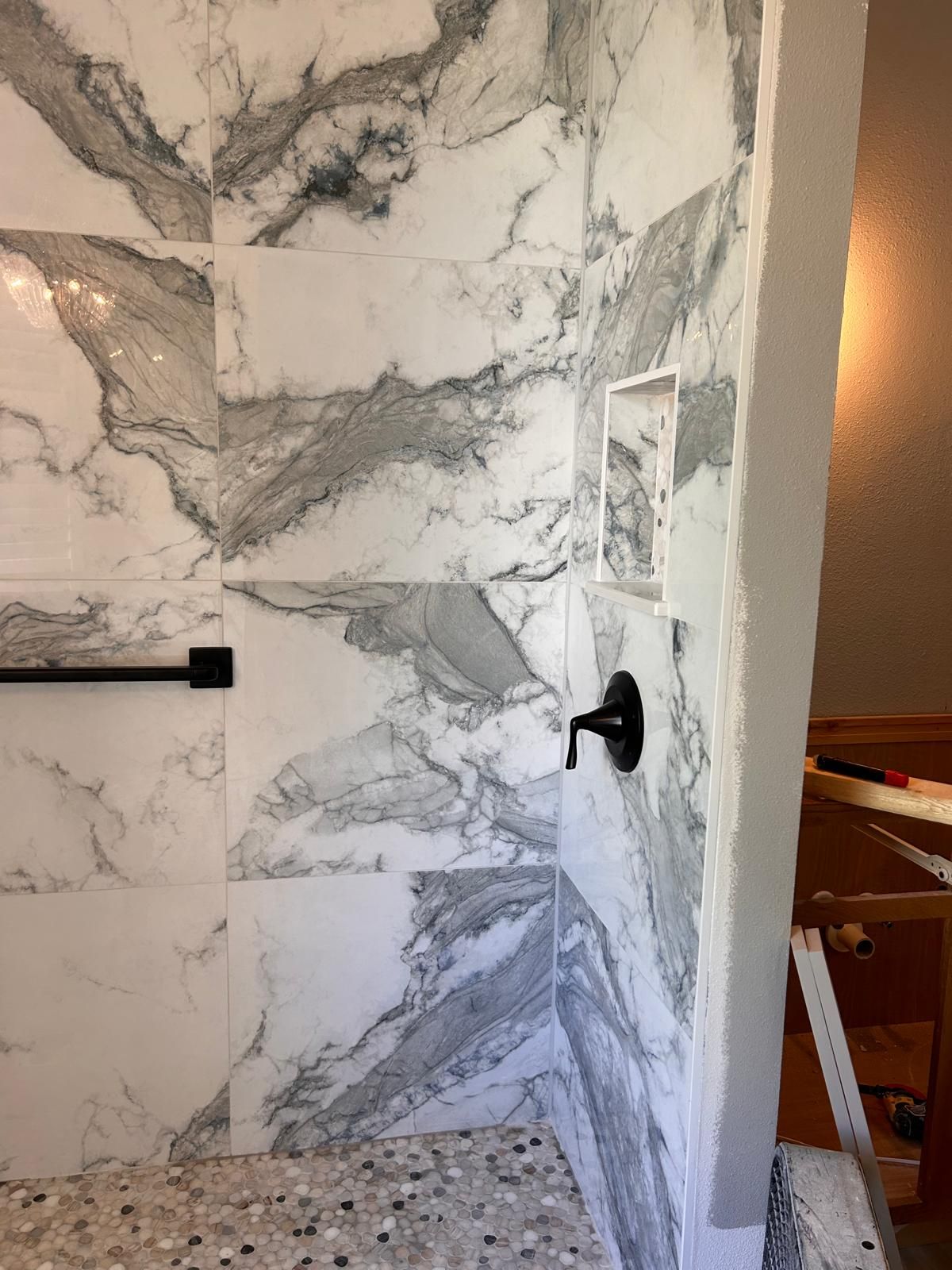
Here is an uncomfortable truth behind a lot of Naples remodeling rescue calls: a beautiful shower that started leaking within a couple of years, because the part nobody could see was done wrong. Tile and stone get all the attention, but a shower is really a waterproofing system with a decorative surface on top. Understanding what happens under the tile is the best protection you have — so here is the plain-English version.
Tile is not waterproof
The first surprise for most owners: tile and grout are not waterproof. Water passes through grout and even through tile over time. That is by design — the waterproofing lives behind and beneath the tile, and the tile is the wear surface. If the hidden system is sound, the shower lasts for decades. If it is not, no amount of pretty tile will save it.
The layers that actually keep water out
A properly built shower is an assembly:
- A solid substrate — cement backer board or a foam board system, never plain drywall in the wet area.
- A waterproofing membrane — either a sheet or foam-board system (like the well-known Schluter approach) or a liquid membrane painted on. Either can work when done correctly.
- A properly built shower pan — sloped evenly to the drain so water cannot pond.
- Sealed penetrations — the drain, the niche, the bench, and every corner treated so there is no gap.
Why showers fail
Failures almost always trace to the hidden layers: drywall used where backer board belonged, a membrane skipped or applied too thin, a pan that does not slope correctly, or corners and a niche that were not sealed. None of it is visible once the tile goes on — which is exactly why a cutting corner here is so tempting for a bad contractor, and so costly for you.
The questions that protect you
You do not need to become a tile setter. You just need to ask, before the tile goes up:
- What goes behind the tile in the wet area — what backer board and what waterproofing membrane?
- How is the shower pan built and sloped to the drain?
- How are the niche, bench, and corners waterproofed?
- Do you test the pan for leaks before tiling?
A good contractor answers these easily and specifically, because they do it right as a matter of habit. Vague answers are a warning worth heeding.
Pay for the part you cannot see
It is human nature to spend on the tile you will admire and to resent paying for waterproofing you will never look at. Resist that instinct. The membrane, the pan, and the sealed corners are the difference between a shower that lasts fifteen years and one that rots the wall behind it in two. In a shower, the invisible work is the work — and it is worth every dollar.
Ventilation is part of waterproofing
One piece people forget: a shower’s worst enemy is not just liquid water, it is trapped humidity. Even a perfectly waterproofed shower will grow mold in the grout and stress the surrounding finishes if the room cannot dry out. A properly sized exhaust fan, vented to the outside and actually used, is part of protecting everything you just built. Think of ventilation as the final layer of the waterproofing system — the one that keeps the whole beautiful assembly healthy long after the tile is set.
Planning a bathroom nearby? See our local guides to bathroom remodeling in Naples, walk-in showers in Naples, and bathroom remodeling in Estero — or explore remodeling in Bonita Springs and Fort Myers.
However you decide to go about it, we hope this leaves you with a clearer, calmer path forward — that is the real point of writing it. A&E24 Renovations is Enmanuel and Ashley, a small family team based in Naples. If you would like a second set of eyes on a shower or bathroom project, you are welcome to reach out any time, no pressure either way.